
Knight Frank Task Scam in Sri Lanka – How Social Media Job Ads Turn Into Financial Traps
You Didn’t Get a Message. You Found an Opportunity.
You weren’t looking for trouble.
You weren’t chasing quick money.
You were just scrolling.
Between ordinary posts, a hiring advertisement appeared. Clean design. Neutral wording. No exaggerated promises. It didn’t say “get rich.” It didn’t say “urgent.” It simply looked like work.
You clicked because clicking felt normal.
You applied because applying felt harmless.
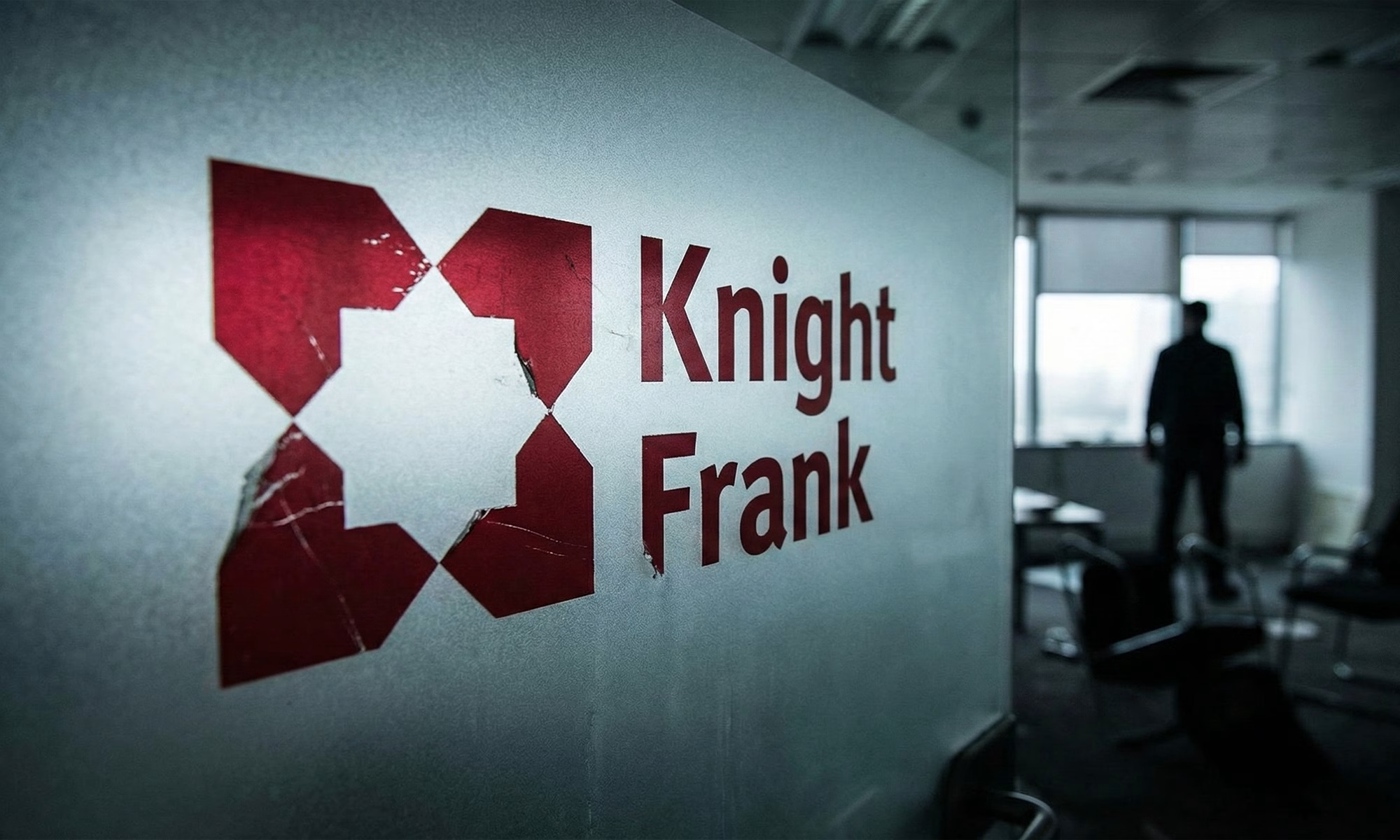
And in that quiet moment — without pressure, without persuasion — the Knight Frank Task Scam in Sri Lanka began doing what it was engineered to do.
A Quiet Shift in Scam Strategy
Something has changed in how these scams operate.
Not long ago, most people encountered scams through direct contact — an unexpected WhatsApp message, a Telegram ping, a stranger asking if you wanted extra income. Those messages were easier to ignore. Easier to screenshot. Easier to warn others about.
That is no longer the primary method.
Scams like the Knight Frank Task Scam now rely on platform-driven discovery. Instead of approaching people directly, the scammers position themselves where people already search for opportunities. Facebook advertising is the most visible channel, but similar campaigns have been observed across TikTok, Instagram, and other social platforms.
The difference is subtle but powerful.
You are no longer being contacted.
You are finding them.
By the time any conversation begins, you have already clicked, already applied, already submitted your details. Everything that follows feels voluntary — chosen — and therefore safer than it actually is.
Stage 1: The Facebook Entry Point — Sri Lanka Workforce
The first touchpoint is a Facebook advertisement operating under the name Sri Lanka Workforce.
It does not claim to be an employer. It presents itself as a workforce or recruitment facilitator. There is no mention of investment. No discussion of deposits. Just a simple invitation to apply.
Sri Lanka Workforce does not message you or explain anything further. Its role is precise and limited: to make you take the first step.
Once you submit your details — especially your phone number — this layer disappears. The psychological shift has already happened.
Stage 2: First Human Contact — WhatsApp
After applying, the first real conversation begins on WhatsApp.
The person messaging you does not claim to be Sri Lanka Workforce. They introduce themselves as a representative of the Knight Frank platform. WhatsApp feels familiar and personal. Recruiters use it every day. You shared your number voluntarily, so the message doesn’t feel intrusive.
The tone is calm and professional. They explain that the platform offers task-based work related to property listings. You are told this is a trial phase. You can stop at any time.
Then comes a simple question:
“Would you like to try the tasks?”
Saying yes feels reasonable. There is no obvious risk.
Stage 3: Platform Illusion — The Fake Knight Frank System
You are given access to a platform branded as Knight Frank.
The interface looks polished. Property images. Project levels. Task buttons. Everything feels structured and intentional. When you search online, you may find a website — but it’s generic. No real job listings. No public recruitment details. Just a form.
That absence doesn’t raise alarms. It lowers resistance. You assume the real system is internal.
At this point, your attention shifts from legitimacy to usability.
Stage 4: Trial Tasks & Conditioning (Still on WhatsApp)
You are given a trial balance and guided through tasks. The tasks are repetitive, simple, and framed as property-related actions. Each task increases your balance slightly. The growth is slow, controlled, and believable.
Nothing feels exaggerated. Nothing feels rushed.
Without realizing it, you stop asking “Is this real?” and start asking “How efficiently can I do this?”
Stage 5: The First Withdrawal — Trust Is Anchored
After completing the trial tasks, the WhatsApp handler guides you through a withdrawal.
The amount is small — usually LKR 2,000 to 3,000.
You follow the steps.
And the money arrives.
Real money.
Into your bank account.
Before Telegram. Before deposits. Before escalation.
This moment matters more than anything else that follows. The platform doesn’t promise legitimacy. It demonstrates it.
Stage 6: Migration to Telegram
Only after the successful withdrawal are you introduced to Telegram.
It is framed as a coordination space for active participants. When you join, you are welcomed immediately. Screenshots of earnings appear casually. Conversations feel organic. New members arrive and are greeted the same way you were.
This group is not for information.
It is for emotional regulation.
Doubt becomes shared. Hesitation becomes normalized. Confidence spreads quietly.
Stage 7: The First Deposit (On Telegram)
The first deposit request happens after you are inside Telegram.
It is not framed as an investment. It is framed as a way to continue accessing tasks at a higher level. The amount feels manageable — often LKR 20,000 to 30,000.
You are not told to deposit. You are asked if you want to continue earning.
By this point, you already withdrew once. Depositing feels like continuation, not risk.
Stage 8: Second Withdrawal & Confirmation Loop
After depositing and completing tasks, you are allowed to withdraw again. This second withdrawal is larger and arrives successfully.
This confirms what your mind has already concluded: the system works.
From here, caution fades.
Stage 9: Mid-Stage Escalation
Balances grow faster. Bonuses appear. Posters advertise limited-time upgrades. You are encouraged to keep funds inside the platform to maximize efficiency.
Money stops feeling like money.
It becomes progress.
Stage 10: Premium Tasks & Negative Balances
A premium task appears. When you complete it, your balance suddenly goes negative.
The group responds instantly. Members reassure you. Others show screenshots of clearing their negative balance and continuing successfully.
Loss is reframed as a temporary state — not a warning.
Stage 11: Extraction Phase
Withdrawals become conditional. New requirements appear: security fees, taxes, verification charges. Each payment is framed as the final step.
It never is.
Stage 12: Collapse
Messages slow. Replies become vague. Then they stop.
The platform may still load, but nothing works. The system does not collapse loudly.
It completes.
A Message From HackAware
At HackAware, we want to be clear about one thing.
What happened here is not the result of poor judgment, lack of intelligence, or carelessness. This system does not succeed because people make mistakes. It succeeds because it is deliberately designed to remove the feeling of risk at every step.
By shifting discovery onto social media advertising, by letting people initiate contact themselves, by paying out real money before ever asking for a deposit, and by moving people into controlled social environments only after trust is anchored, this scam bypasses the warning signs most people are taught to look for.
That is not coincidence.
That is structure.
When someone believes they chose freely, they defend that choice longer. When money arrives before money is asked for, skepticism collapses. When doubt is shared inside a group, it dissolves quietly instead of triggering alarm.
If this flow feels familiar, you are not alone. Many others followed the same sequence, for the same reasons, under the same conditions. The system did not fail you. It did exactly what it was built to do.
Stay Sharp. Stay Safe. Stay HackAware.
– DEBUGGER