
The Sinister McAfee Invoice Scam
It’s not a bill. It’s bait.
It happened.
I had a feeling it would eventually. I’ve been watching, expecting it.
But not like this.
Not this soon.
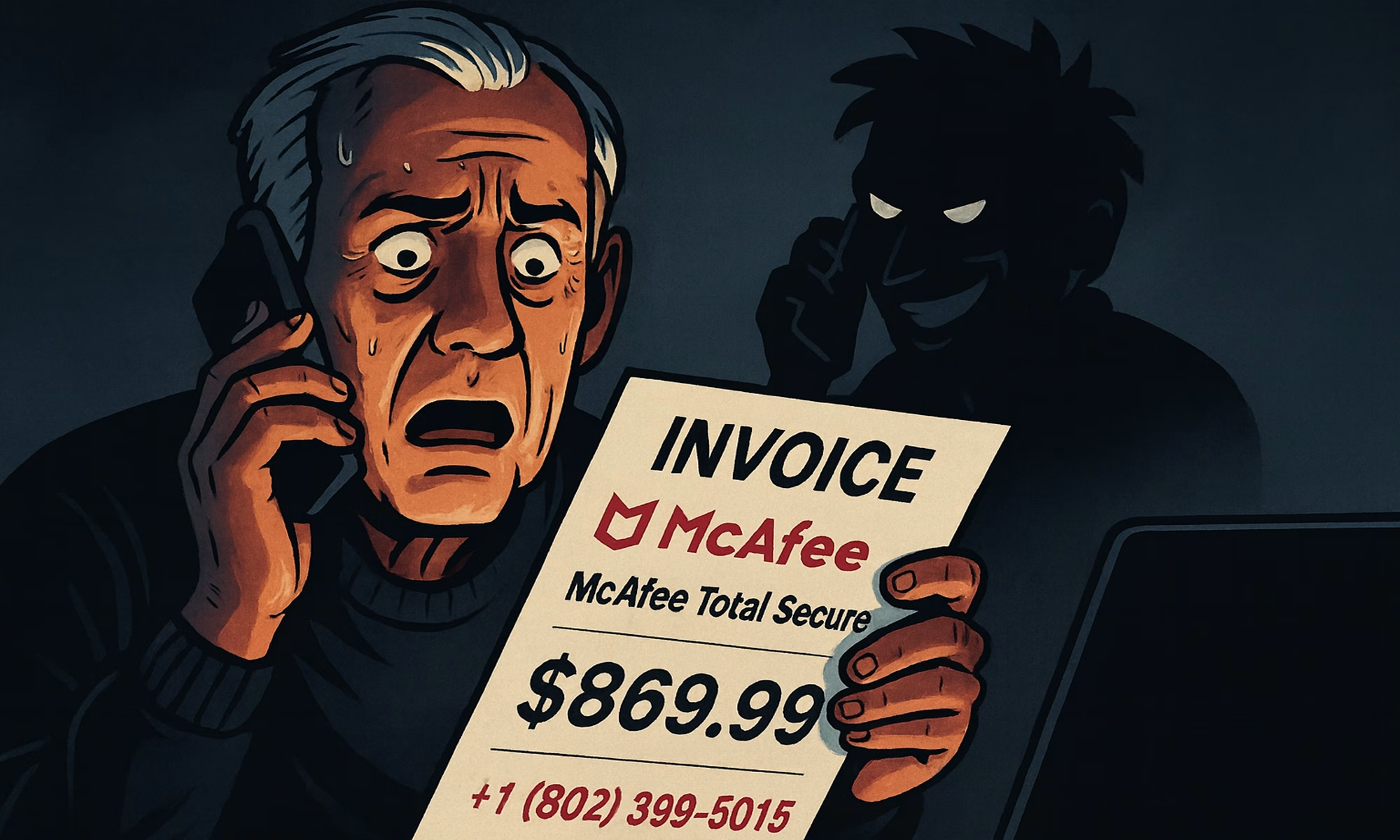
We got an invoice.
From McAfee.
Not just one — two.
And no, they weren’t charging peanuts.
$869.99 — for something called McAfee Total Secure.
A product I didn’t ask for.
An invoice I didn’t approve.
A price that could spike anyone’s blood pressure.
🧾 The Invoices (They Look Real — They’re Not)
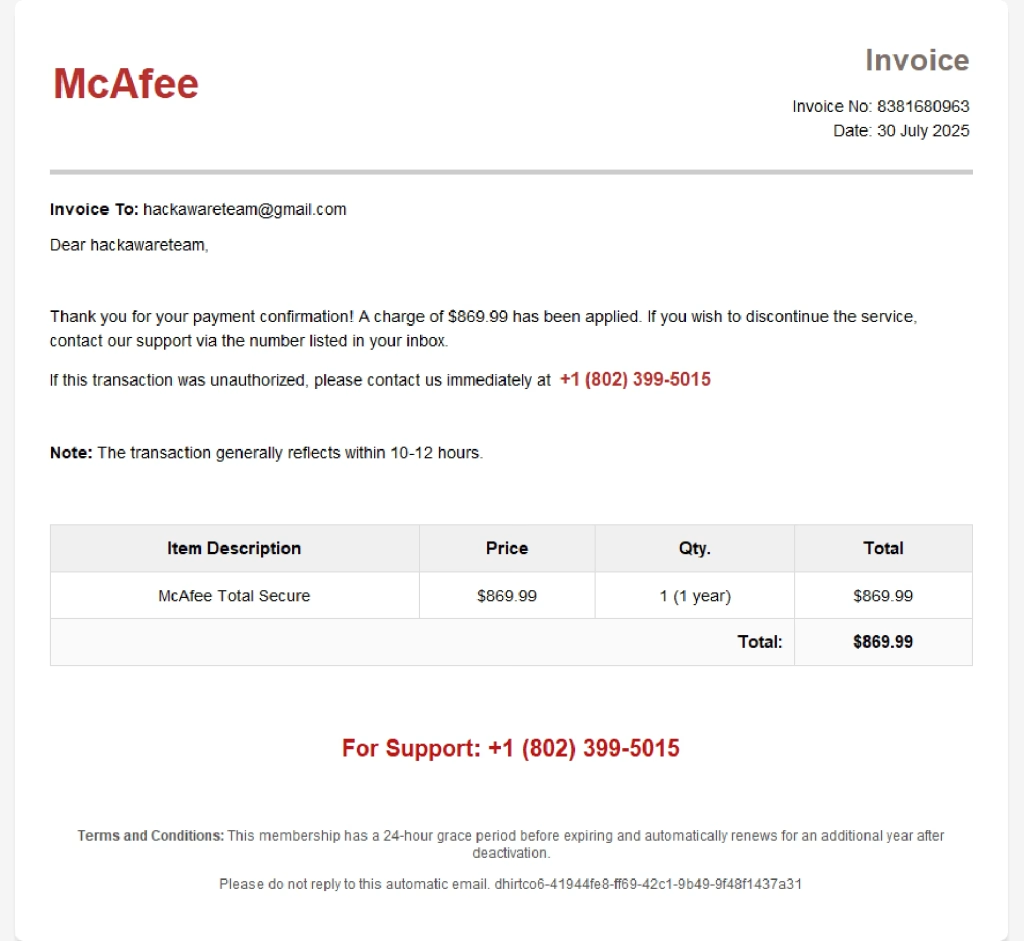
At a glance, they look official. Polished.
Like something that slipped through from your bank, your antivirus provider, or a forgotten subscription. But the moment you start reading — the urgent tone, the bolded warning, and that red support number +1 (802) 399-5015 staring back at you — the whole thing starts to unravel. It’s not a receipt. It’s a carefully planted trap.
This isn’t an invoice.
It’s bait.
It’s a psychological weapon disguised as a routine email.
🎯 What This Really Is: A Refund Scam
I’ve seen these before — more times than I can count.
The scam doesn’t begin when the email hits your inbox.
It begins when your brain kicks into panic mode.
So let’s walk through how it plays out.
🎣 The Hook
You’re kind.
You trust people.
You use email, sure, but you don’t follow the tech world. You don’t second-guess every invoice. You just want to do the right thing.
And then you see it:
“Thank you for your payment. A charge of $869.99 has been applied.”
What do you do?
You call the number.
☎️ The Call
A polite voice picks up.
Maybe there’s background noise — sounds like a real call center.
The rep sounds calm, friendly, professional. There might be a light accent. They apologize for the mix-up. They offer to refund you the full amount.
But first:
“Are you near your computer, madam/sir?”
⚙️ The Setup
Once you say yes, things move quickly.
- They guide you to install a remote access tool — AnyDesk, TeamViewer, maybe something else.
- They connect to your screen.
- They open what they call a “secure refund portal.”
(Spoiler: it’s just a black terminal window or a fake webpage.) - Then the real scam begins.
🧨 Path One: You Made the Mistake
You’re told to enter the refund amount — let’s say $100.
But on their fake refund system, you “accidentally” type $10,000.
Suddenly, everything changes.
“Oh no… oh my god, what did you do?”
“I can’t believe this. My manager is going to kill me!”
“You just cost me my job. Please… I’m begging you, help me fix this.”
They cry. They sound desperate. They make you feel like the villain in someone else’s story.
Now it’s your turn to do the right thing.
They say the only solution is for you to return the extra money.
🧠 Path Two: They Made the Mistake
In this version, they say they over-refunded you.
They tell you $10,000 was mistakenly deposited into your account.
They even “show” it to you — editing your online banking page live, while they control your screen.
You see the balance. You panic.
You feel guilty.
You feel like you’re holding someone else’s paycheck.
So you agree to send it back.
But it was never there.
You just gave away real money — trying to fix a fake mistake.
😵 The Emotions They Weaponize
Scammers don’t just rely on software.
They rely on you — your empathy, your guilt, your fear.
They create panic and urgency.
They play the victim.
They praise your honesty.
They beg you to help.
And then, they turn your good intentions into your greatest vulnerability.
Here’s the playbook they use:
- Panic – “You’ve been charged!”
- Urgency – “You only have 24 hours!”
- Guilt – “You made a mistake.”
- Empathy – “Please don’t let me lose my job.”
- Shame – “How could this happen?”
- Trust – “We’re from McAfee.”
It’s emotional warfare — and they’re winning more than you think.
💸 How They Steal Your Money
These scammers are smart.
They avoid anything that can get traced easily.
Here’s how they collect your money:
🏦 Bank or Wire Transfers
Fast, final, and nearly impossible to reverse once it leaves your account.
🕵️ Hawala / Cash Pickup
You’re told to hand over the money or meet someone. No digital trail. No names. Just a ghost.
🎁 Gift Cards
They tell you to buy Apple, Google, Steam, or Amazon gift cards and read them the codes. Once read, the money’s gone.
₿ Cryptocurrency
Bitcoin, USDT, whatever’s hot. Anonymous and irreversible. The perfect weapon for a modern scammer.
🏧 Cash Deposits to a “Business Account”
You’re sent to a bank with account details. You hand over your money — often into accounts set up using fake or stolen identities.
🆘 What To Do If You Got Scammed
You might not get your money back.
You might never catch the people behind it.
But you’re not powerless.
Do this immediately:
- Disconnect your internet
- Uninstall remote tools like AnyDesk or TeamViewer
- Run a malware scan
- Reset your passwords
Then:
- Report the incident to your bank
- File a complaint with your local cybercrime division or CERT Sri Lanka
- Tell someone. A friend. A family member. A neighbor. Don’t carry it alone.
🧨 Final Thoughts: Don’t Let Guilt Be Their Weapon
They want you to feel stupid.
They want you to be ashamed.
They want you to stay silent.
Don’t.
Speak up.
Screenshot everything.
Share what happened.
Your voice might be the reason someone else stops before they call that number.
– DEBUGGER
Know the Threat. Stop the Attack.