

The Fake “Dilmah” VIP Investment Scam
⚠️ Disclaimer
HackAware.org confirms that Dilmah Ceylon Tea Company is in no way connected to, affiliated with, or responsible for the fraudulent websites or online activities described in this article.
This article does not accuse Dilmah or its affiliates of wrongdoing.
It is a verified public-awareness report, created to educate users about online impersonation, brand misuse, and financial fraud, and to help prevent future victims.
You probably saw it somewhere recently.
A Facebook post shared by a real Sri Lankan account — not a bot, not a fake profile.
“Join the Dilmah online earning site! Deposit Rs. 300 and make daily income.”
It looks official: the familiar green logo, the same packaging you see in stores, written in Sinhala.
Nothing seems off.
That’s what makes it effective.
It feels local, safe, and even patriotic.
But the site isn’t connected to Dilmah Tea at all.
It’s a brand-impersonation scam, one of the most convincing yet to appear in Sri Lanka.


Why Would They Give You Rs. 300?
That’s the question almost nobody stops to ask.
When you sign up, the site “gifts” you Rs. 300.
It looks like a bonus, but it’s bait.
The moment you try to withdraw it, a message appears:
“Deposit Rs. 300 to activate your account.”
It sounds harmless.
Just a small deposit to unlock your funds.
You make the payment — and suddenly your balance jumps to Rs. 610.
You feel like you’ve earned something.
But nothing has actually changed.
Those numbers live only inside the website’s database.
That small “gift” is there to prove the system works before it takes more from you.
You see money coming in, so you stop questioning where it’s coming from.
The Payment Loop
When you make that first deposit, you’re redirected to srilanka.checkout.news — a page labelled SAFE ✦ FAST.
But instead of a business account, you’ll see random personal bank details.
Sometimes it’s NSB, sometimes Dialog Finance, sometimes Commercial Bank — and the account names change each time.
HackAware found that these belong to money-mule accounts: ordinary people tricked by earlier job scams into processing deposits for scammers.
It’s the same pattern we exposed in:
Those cases showed how fake “online jobs” recruit victims to collect or transfer money.
The fake Dilmah platform is now using those same networks to handle payments — turning victims into accomplices without their knowledge.
The VIP Ladder
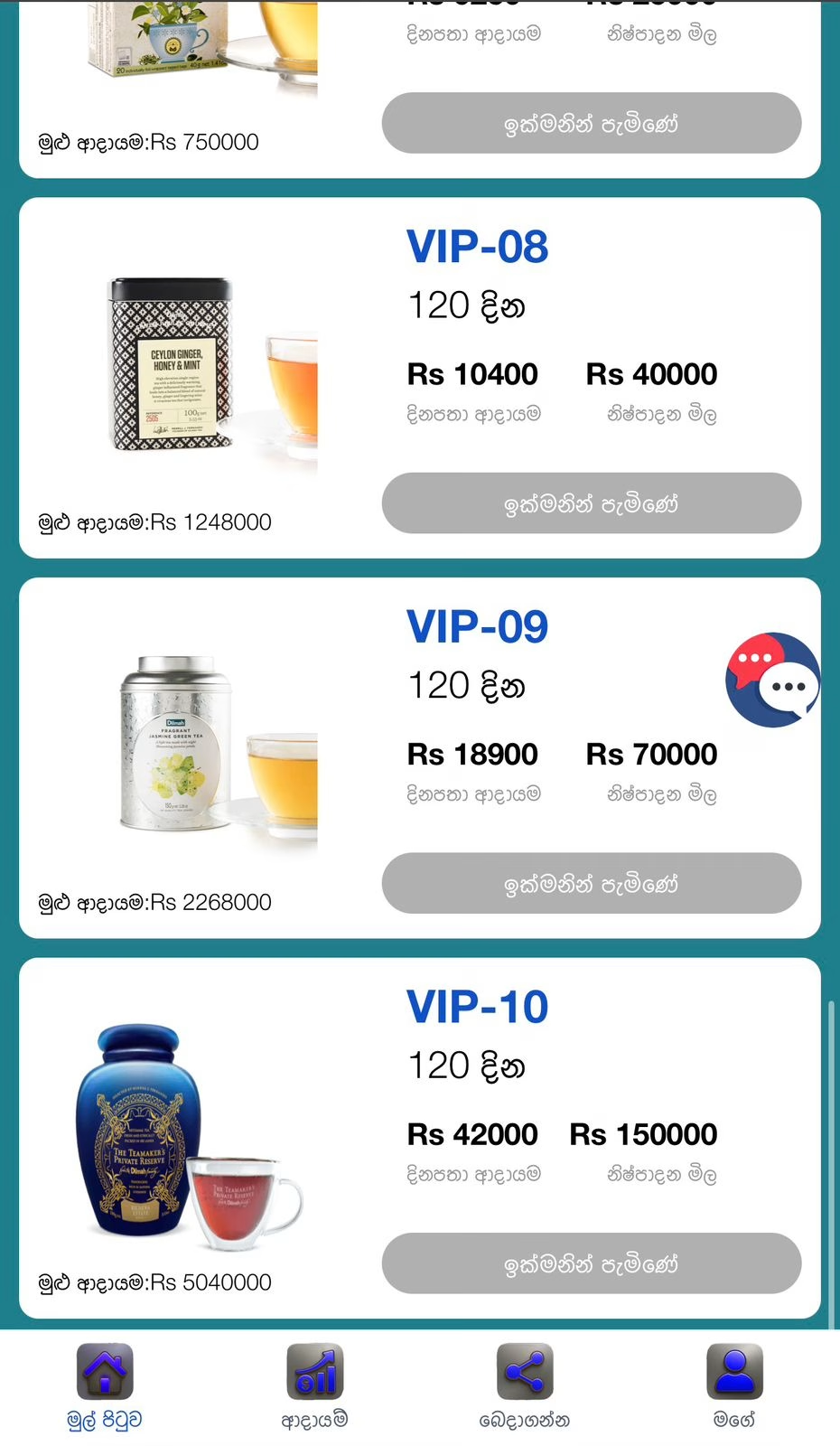
After that first deposit, the website unlocks VIP Levels.
Each one costs more — Rs. 300, Rs. 600, Rs. 1 000, Rs. 2 000 — and each promises absurd profits like Rs. 14 400 or Rs. 25 200.
Only one level unlocks at a time.
It’s a subtle trick.
That lock makes you curious.
You think, “If Level 1 worked, Level 2 must be even better.”
Each “upgrade” feels like progress, even though it’s just another payment.
It’s not a bug; it’s the design.
Every stage is engineered to make you spend again — and believe you’re earning more.
The Psychology Behind It
Scammers don’t need to be tech experts; they need to understand people.
The fake Dilmah site is built on predictable human instincts.
- Familiarity: Using a respected Sri Lankan brand builds immediate trust.
- Small risk: Rs. 300 is low enough to silence doubt.
- Social proof: Seeing friends share it online makes it look real.
- Waiting equals legitimacy: “Processing” delays mimic genuine financial systems.
- Progress illusion: Small fake profits keep users motivated.
These psychological levers are universal — and they’re being deployed with alarming precision in Sri Lanka.
What the Investigation Shows
- The fake site operates as a localized digital pyramid, powered by small recurring deposits.
- Each deposit flows through real Sri Lankan bank accounts, making the scam appear legitimate.
- The “VIP” system creates continuous engagement until the operator eventually disables withdrawals and disappears.
- Once enough users lose interest, the domain will vanish — and a new one will replace it under a different name.
It’s not the first time we’ve seen this pattern, but the use of a household brand like Dilmah marks an escalation in sophistication.
Update: Official Response
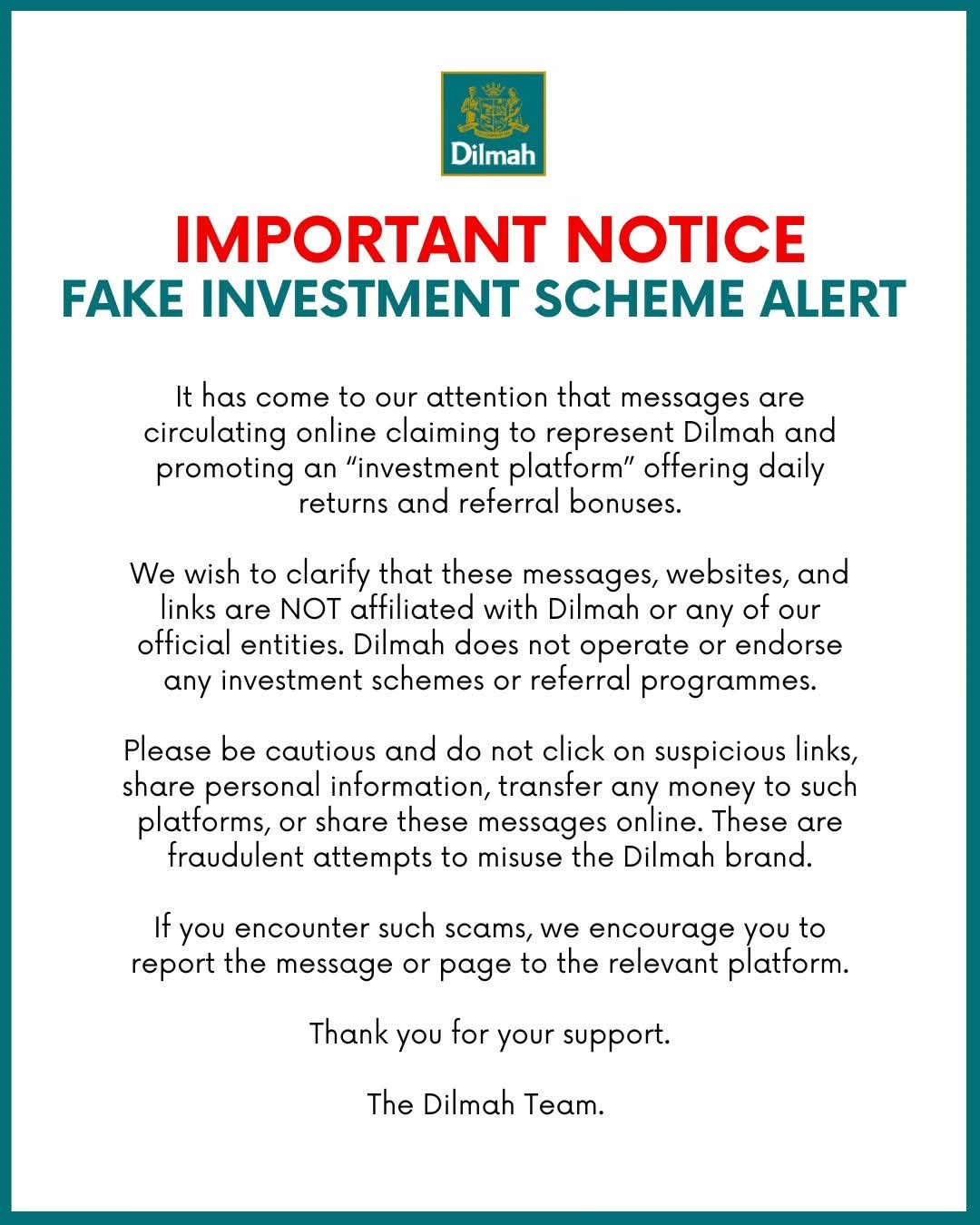
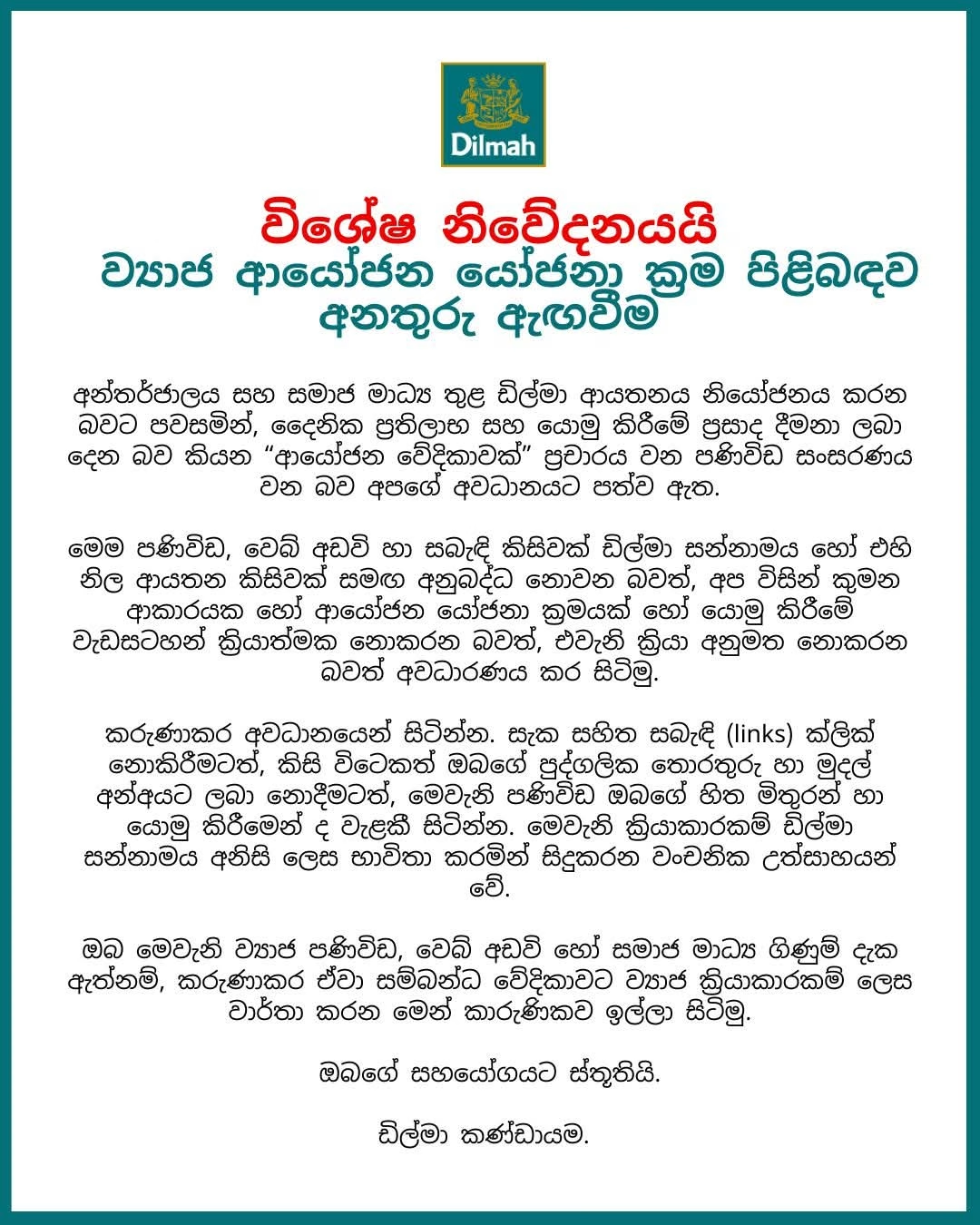
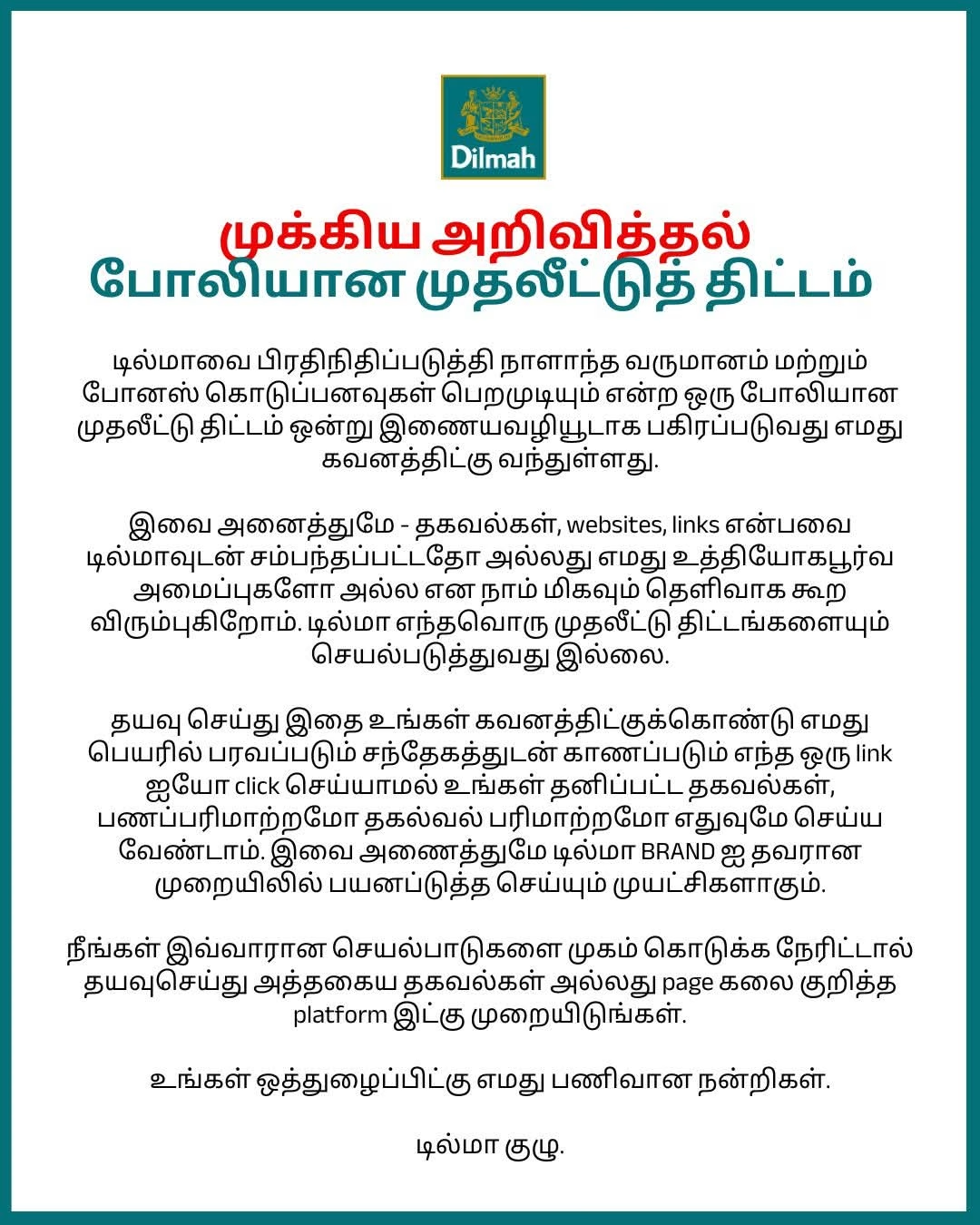
On 22nd October 2025, Dilmah Ceylon Tea Company issued an official public statement across its verified social media pages, warning the public of fake investment schemes and clarifying that the company does not operate or endorse any investment or referral programs.
This confirmation aligned with HackAware’s findings and helped validate the scope of the impersonation.
If It Were Real
Let’s apply logic.
Why would a tea company pay random internet users daily cash rewards?
Real businesses spend on advertising, sales, or community projects — not unexplained deposits through Telegram groups.
There’s no product here, no service, no marketing objective.
It’s an economic impossibility.
When payouts depend only on new deposits, it’s not investment; it’s circulation.
And when circulation stops, the scam collapses.
The Bigger Picture
Scams in Sri Lanka are changing shape.
They’re no longer clumsy or foreign.
They look local, sound familiar, and speak directly in our language.
This fake Dilmah scheme feels like the start of a new wave — where trusted names are repurposed for emotional credibility.
We’ll be watching.
And we’ll keep you aware.
A tea cup dissolving into pixel fragments with the text “Stay Aware.”
Alt-text: “Symbolic image representing vigilance against digital deception.”
Every scam runs on two things — trust and silence.
Break either one, and it fails.
If you see someone sharing this platform, don’t attack them; explain it.
Because awareness spreads faster than fraud when people start talking.
Know the Threat. Stop the Attack.
— DEBUGGER