
Daraz Cart Task Scam in Sri Lanka – Fake Binance Trading (newbinance.top) Exposed
TL;DR
If someone asks you to add items to a Daraz cart so you can “get paid,” stop. It’s bait. Once you trust them, they push you onto a fake Binance platform such as newbinance.top, where they show fake USDT balances and force you to deposit into personal bank accounts. Victims in Sri Lanka have already lost lakhs.
Debugger’s thoughts
A reader recently contacted us after losing Rs. 454,000. That kind of number is terrifying — not only because of the money, but because the whole operation feels so convincing when you’re inside it. What worries me most is that the same pattern keeps returning under different names: Daraz cart tasks, ticketing jobs, or “high-commission task orders.” The disguise changes, but the trick is identical. New victims fall every time.

It starts small — and that’s the point
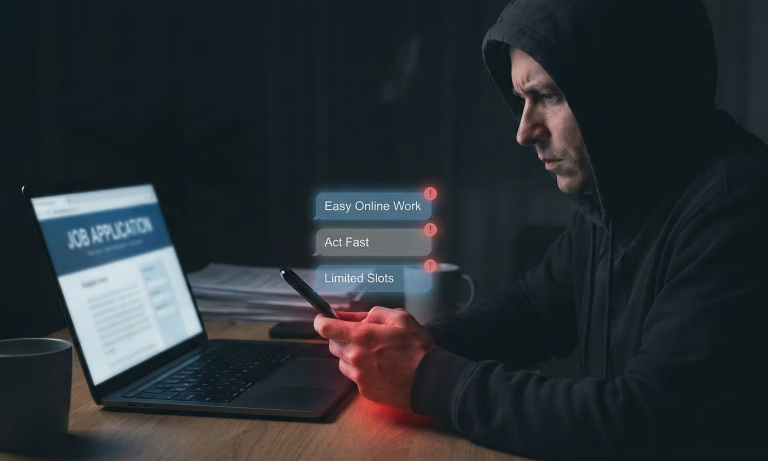
Your phone buzzes. You’re added to a group by a number you don’t know. The message looks harmless:
“Would you like to earn extra money online? Add items to a Daraz shopping cart and get paid.”
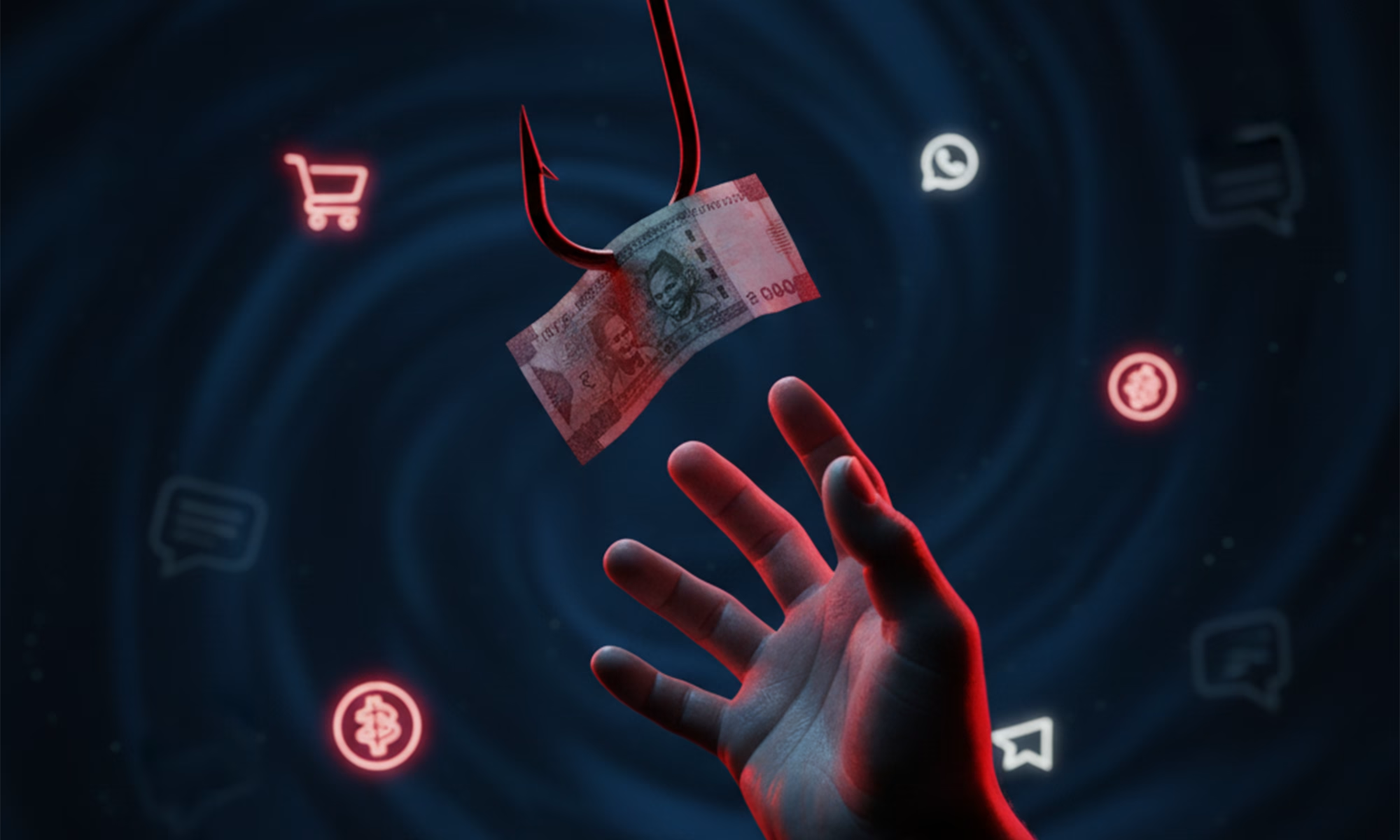
You try it. You send the screenshot. Within minutes — unbelievably — a small payment appears in your bank: Rs. 150, Rs. 600. That tiny, real payment is the hook. Suddenly it doesn’t feel like a stranger; it feels like opportunity.
Enter the “auditor” — and the upgrade to “speculative tasks”
After those small rounds, someone called an auditor contacts you. They ask for basic details and say your registration is complete. Then they introduce the “speculative tasks” — the step that turns a simple micro-job into a money pit.
The fake Binance site — the illusion of huge USDT balances
You’re given a link such as newbinance.top. It copies Binance’s look and feel. A “mentor” walks you through registration and trading, and the screen fills with massive USDT balances and flashy options: 50% returns, 100× leverage. It looks professional and familiar — which is exactly why it works.
 The fake site mimics Binance to trick users into believing their funds are real.
 Victims see huge fake balances that don’t exist on any blockchain.
 Real-looking charts add credibility — they don’t mean the funds are real.
The first payouts — bait that builds trust
To prove it’s “real,” the scam pays you tiny amounts back. You deposit Rs. 4,900 into a local bank account; minutes later your fake dashboard shows USDT and you receive Rs. 7,840 in your bank. You feel lucky. You try Rs. 11,900 and get Rs. 22,460 back. That pattern convinces you the system “works,” and you’re ready to risk more.
The trap tightens — large deposits and the fake fee
Once trust is built, deposits escalate: Rs. 22,000 → Rs. 88,000 → Rs. 344,000. Telegram groups stuffed with fake “winners” push urgency and FOMO. Finally, to release “your funds,” the scammers invent a loan/fee — suddenly you’re asked to pay Rs. 1.72 million to withdraw what you were told was yours. At that moment most victims realize the truth: the money is gone.

How people get pulled in — it’s not about stupidity
Looking back it seems obvious. While you’re inside, it does not. They orchestrate psychological pressure: small real payouts, a professional-looking site, social proof in groups, and rules that punish “skipping.” This is manipulation engineered to make you keep sending money.
How are scammers getting Sri Lankan phone numbers and local bank account access?
Looking at the WhatsApp chat and the many local phone numbers used, it’s clear the operation has a solid Sri Lankan reach. That raises an important question: how are mostly foreign scam groups getting Sri Lankan contact numbers and local banking access? There’s no single answer, but likely possibilities include:
- Leaked or bought data: phone numbers and personal details can be bought from data brokers or found in leaked databases, then used to seed recruitment lists.
- SIM farms / resold SIMs: organized groups may use many local SIMs (physical or eSIMs) to appear local. eSIM provisioning makes it easier for outsiders to obtain local numbers without physical presence.
- Compromised devices / malware: victims who install unknown apps can have contacts and numbers harvested.
- Number spoofing / burner numbers: scammers can spoof caller IDs or rent temporary local numbers to seem domestic.
- Money-mule networks and local collaborators: to receive deposits, scammers recruit or coerce local accounts — sometimes via “task” victims themselves — turning ordinary bank accounts into collection points.
All these channels mean the scam can appear locally run even if its controllers are abroad. For a deeper look at identity and KYC abuse in Sri Lanka, see our explainer on KYC fraud. Possibilities include KYC fraud being used to create SIMs registered under people who sell their personal information for money, or under identities assembled from leaked data, which would make it easier for foreign operators to pose as local recruiters and collect deposits through local bank accounts.
What to do right now if you’re in one of those groups
If you are in such a group, do not panic — do these steps now:
- Leave the group immediately.
- Do not deposit another cent.
- Contact your bank and flag the transactions (ask them to monitor or freeze incoming/outgoing transfers if possible).
- Report to the Cyber Crime Investigation Division (CCID): [email protected] — attach screenshots and receipts.
- Preserve evidence: screenshots, transaction IDs, timestamps, Telegram/WhatsApp handles.
- Warn others: post in local channels or share this article — awareness saves others.
Final warning — the brand names are only masks
This isn’t Daraz. This isn’t Binance. Those brand names are being abused to make a convincing story. The real operation uses fake dashboards, local deposit accounts, and social proof to steal from people who are often only trying to earn a little extra.
If you’ve lost money, you’re not alone — and you’re not to blame. Speak up, report the crime, and help us warn others.
Know the threat. Stop the attack.
— DEBUGGER