

The Art of Fake Proof: How Scammers Make You Believe It’s Real
2025 has been the year of deceptive perfection —
the year when scams stopped looking like scams and started feeling like opportunities.
They reached out to us through Telegram and WhatsApp, promising big money in a short time — a dream come true for anyone trying to make ends meet.
But behind those promises were some of the most convincing fake documents Sri Lanka has ever seen.
Even now, new clones pop up every week — giving out small payouts, pulling in bigger deposits, and vanishing within days.
This isn’t about one single scam.
This is about the props that power every modern scam — the fake company letters, payment receipts, registration certificates, and IDs that make deception look professional.
These same tactics appear in VIP channel scams, brand impersonation schemes, and Telegram “task” scams that have flooded Sri Lanka’s social media feeds.
Most of them were built to trick people like you and me into giving away our final rupee.
Note: Personal details of victims have been redacted for their privacy and safety.
ID documents shown were blurred — scammers rarely use their own.
1. The “Official Letter”
The personalized company guarantee — and the seal that sells the lie
It always begins with something that looks official.
A clean letterhead. A company logo you’ve heard of. A signature at the bottom that looks stamped and scanned.
It says your “withdrawal is ready,” or that you’ve “qualified for a VIP channel” — but there’s a catch. You must pay a small “security” or “processing” fee first.
It feels personal, professional, and urgent.
That’s because it’s designed to. Scammers mimic corporate formatting so perfectly that, for a moment, you believe it.
They even attach seals — “Approved by Legal,” “Certified,” “Company Verified” — to make you feel it’s legitimate. But look closer and you’ll see: the same stamp and signature appear across five unrelated letters.
That’s not authority. That’s Photoshop.
If a letter praises you for being selected, demands a deposit, or comes from a personal email or WhatsApp number — stop right there.
Real companies don’t ask for money to release your own funds.


2. The “Digital Letter”
When fake documents move into chat apps
Not all scams arrive as PDFs anymore.
Some now live inside your chat window.
In one Telegram case, the “Financial Advisor” sent what looked like an automated system alert — complete with a Windows-style pop-up, warning that a “Security Deposit of 50%” was required before withdrawal.
It even used terms like “compliance,” “merchant protection,” and “financial regulation” to sound legitimate. But the irony? It was sent inside a casual chat, not an official system.
That’s the next stage of deception — turning chat messages into interactive fake documents.
Scammers no longer just send files. They perform legitimacy.

3. The “Registered Company” Document
Fake certificates of incorporation — or real ones used for the wrong reasons
The next trick is credibility on paper.
Scammers know the power of an official-looking certificate. So they send PDFs that mimic government registration documents, complete with crests, seals, and registration numbers.
They look bulletproof — but the numbers don’t match, the QR codes lead nowhere, and the seals are copied from Google Images.
Worse, even real registration certificates can be weaponized. Many pyramid schemes in Sri Lanka are legally registered, and they use that fact to appear legitimate.
A certificate doesn’t prove honesty — it only proves someone filled out paperwork.


4. The “Identity Proof”
Borrowed faces and fake IDs
Nothing builds trust faster than a face.
Scammers exploit this by sending photos of ID cards, passports, or even selfies with the same ID in hand.
They claim these belong to “finance officers,” “agents,” or “verifiers.”
In reality, most are stolen, edited, or AI-generated. The text is pasted on. The holograms are missing. The edges are blurred.
If someone sends an ID to prove they’re real — remember: anyone can fake a card.
Never let a photo of someone’s ID override your caution.


5. The “Payment of Proof”
Screenshots, chats, and the illusion of trust
This is where the scam becomes a show.
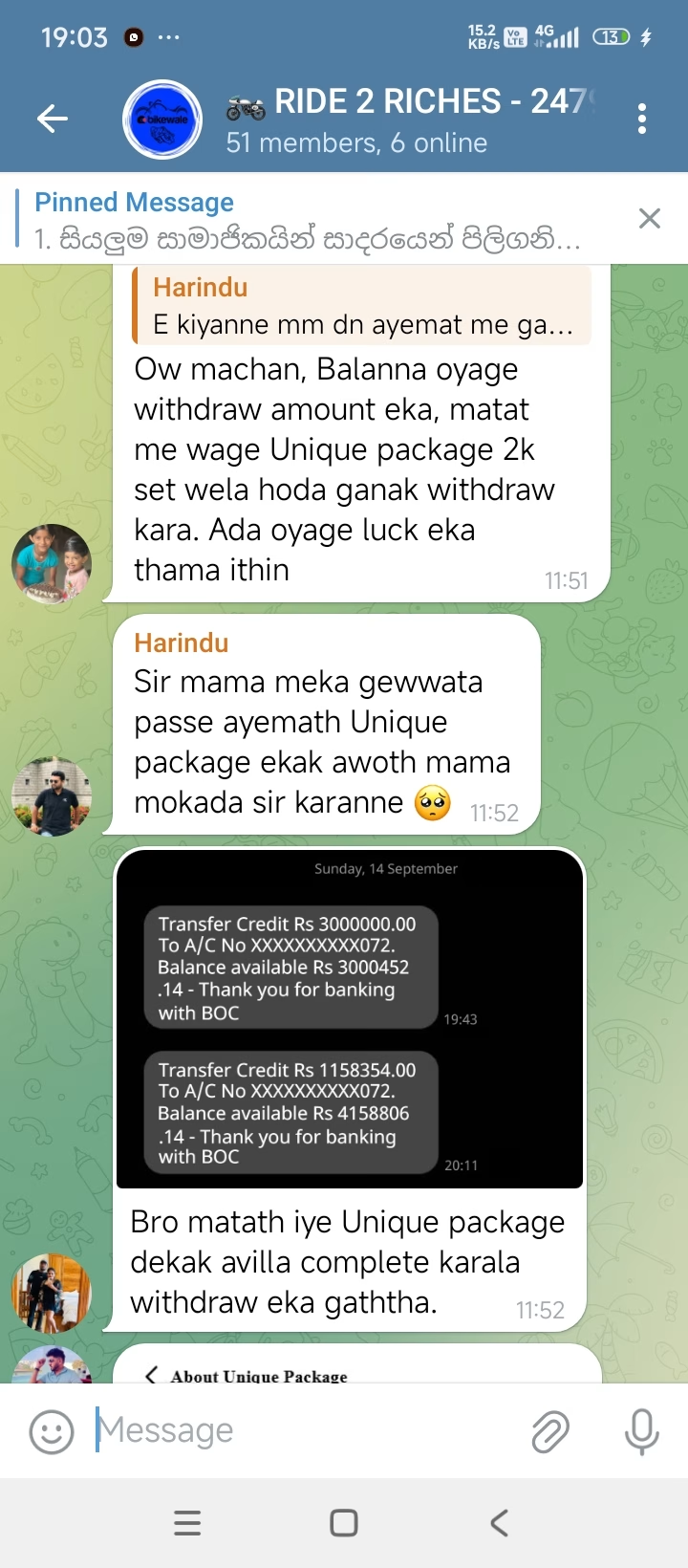
You’re added to a Telegram or WhatsApp group — a lively space filled with messages like:
“Got paid today!”
“VIP channel cleared!”
and screenshots showing large sums moving between accounts.
They look convincing — because sometimes, they are real.
Scammers often transfer small amounts between fake “members” to make the activity seem genuine before demanding a much larger deposit from you.
It’s not coincidence. It’s psychological priming.
You see proof. You see others celebrating. You feel safe — and that’s when they strike.
This is the modern “social proof” scam: a mix of staged group chats, doctored bank receipts, and emotional manipulation.
They’ve turned community trust into a weapon.
If a payment slip arrives before the money does, treat it as fiction.
And if a group looks too perfect — it probably is.

6. The “Voice Behind the Screen”
When a scam starts to sound human
Sometimes, it isn’t just messages or documents — it’s a voice.
A real person on the other side of the call. Calm. Confident. Helpful.
They explain the process like a professional would: step by step, polite, reassuring. You hear laughter, empathy, even patience.
And that’s exactly how trust is built subconsciously — not through logic, but through tone and familiarity.
When a real voice explains the scam, it becomes easier to believe the story. It feels like customer service, not manipulation. That human connection is the final touch in their illusion.
Always remember: being polite doesn’t make them genuine.
The calm voice is part of the script.
Here is a set of voice recordings real victims got before they deposited their money.
7. The “Fee Sheet”
Tax or processing calculation tables
To make the fraud sound complicated — and therefore credible — scammers attach spreadsheets full of “processing charges,” “taxes,” and “remittance fees.”
The numbers look professional. The jargon feels official.
But the math rarely adds up. “Final deductions” appear and disappear. Percentages are made up.
It’s designed to overwhelm you — to make you think “I don’t understand finance, so maybe they’re right.”

The Golden Rule: If It’s Too Good to Be True — It Is
No matter how real the document looks, no matter how urgent the message sounds — the same rule applies:
If it’s too good to be true, it usually is.
Real opportunities don’t come through random chats.
Real payouts don’t need prepayments.
And genuine companies don’t communicate through WhatsApp groups asking for deposits.
Adopt the Zero-Trust Mindset:
Even if the letter looks official, the signature looks stamped, and the seal shines with authority — verify everything.
Trust no document, no link, no promise until you’ve confirmed it through official, public channels.
Zero trust doesn’t mean paranoia.
It means protection.
The Reality Behind the Illusion
Each of these tricks — the letters, the receipts, the IDs, the chats — are designed to disarm you.
They exploit emotion, not ignorance.
Before you act on any offer that looks too perfect, pause and check.
Call the real company, visit the official website, or ask someone you trust.
Even a 30-second pause can save you months of regret.
If you ever receive these kinds of documents, keep every piece of evidence — screenshots, messages, audios — and report them to your bank and law enforcement.
Don’t delete. Don’t edit.
Even fake proof can lead investigators to real criminals.
Because in the end, scammers can fake everything —
except accountability.
Know the Threat, Stop the Attack.
– DEBUGGER


