

Smatowl Sri Lanka: A Familiar Task-Deposit Scam Pattern
Before anything else: pause before depositing.
If you are being encouraged to join Smatowl, complete product tasks, upgrade a level, recruit a team, or transfer money to a bank account supplied inside the platform, do not treat early payouts or a polished dashboard as proof that the operation is safe.
Bottom line up front
HackAware’s review found a high-risk task-deposit structure. Smatowl presents product activity and commissions as work, but earning access is tied to deposits, paid progression and team growth. Deposit instructions can route users through third-party payment channels and changing Sri Lankan beneficiary accounts. These characteristics closely resemble the mechanics previously documented in Triumph Media House (TM), Max App Media and AGM TV Sri Lanka.
HackAware advises the public not to deposit, recruit others, or upload payment proof until the operator, business registration, source of returns and custody of funds are independently verified.
Why HackAware examined Smatowl
We reviewed the platform from inside a test account using non-production credentials. No payment, task purchase or withdrawal was completed. The purpose was to document what a participant is shown, how deposits are requested and how the operation builds trust.
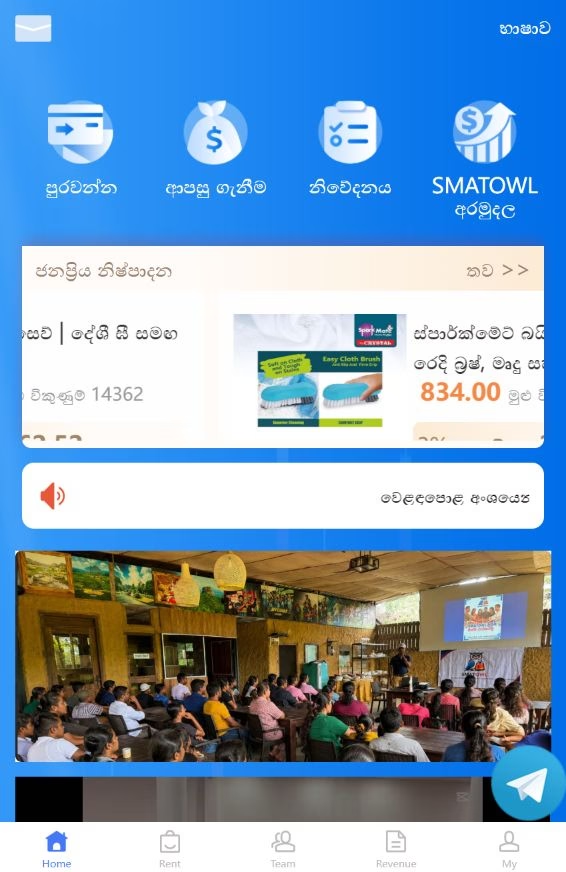
- The interface presents shopping-style product tasks and commission language.
- Progression depends on paid access rather than ordinary employment or measurable commercial work.
- Team and recruitment features are built into the platform.
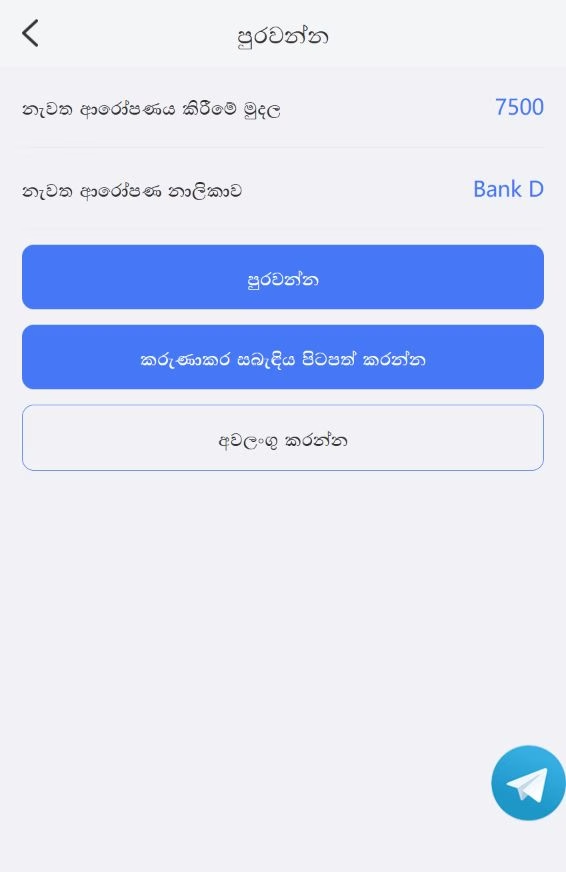
- Deposits are initiated through named payment channels rather than a clearly disclosed corporate bank account.
- Different checks produced multiple Sri Lankan banks and beneficiaries.
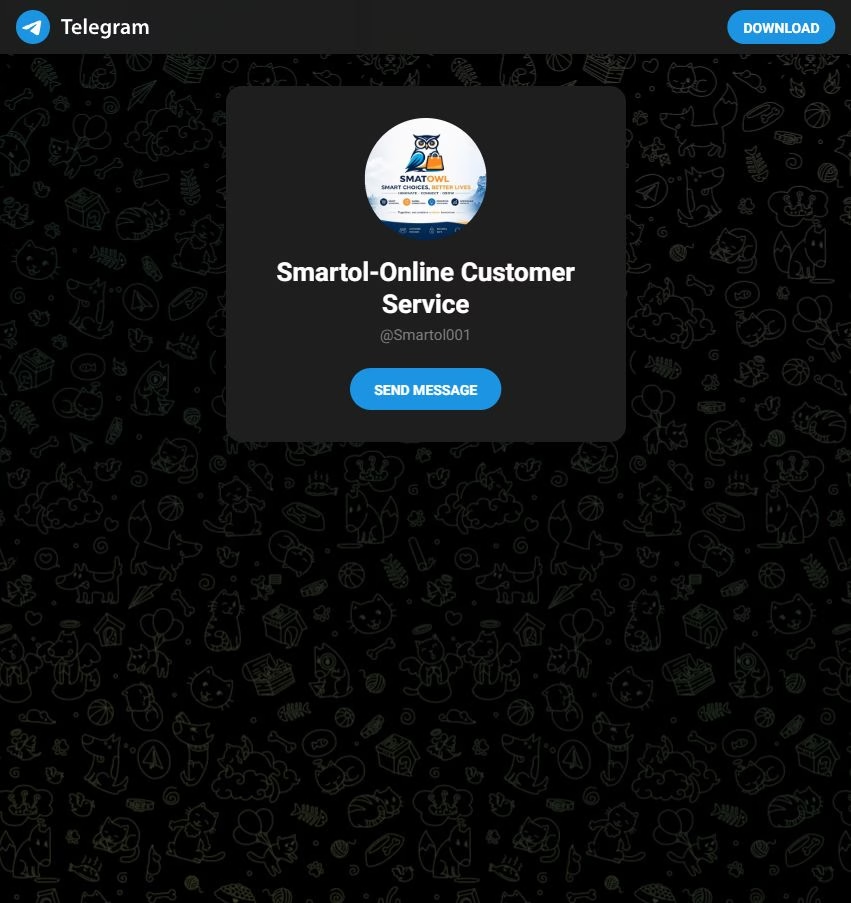
- A Telegram identity presented itself as online customer service for the operation.
What the app is designed to make users feel
The app combines familiar retail imagery, task counters, team features, revenue language and social proof. This makes the experience look like ordinary e-commerce work. But the critical question is not whether the interface looks professional. It is whether genuine, independently verifiable customer demand produces enough external revenue to fund the returns shown to participants.
HackAware has not seen evidence establishing that product sales to independent customers—not participant deposits—fund the promised earnings.
The deposit flow raises the strongest concern
When a user selects a deposit amount, the platform can pass the payment through a named channel and then display a bank beneficiary. Repeated checks showed that beneficiary details can vary across banks and amounts. A legitimate platform should be able to explain who receives participant money, why accounts rotate, how those accounts relate to the operator and what safeguards protect the funds.
Telegram is part of the trust layer
A public Telegram identity was presented as Smatowl online customer service. Messaging channels are commonly used by task-deposit schemes to guide payments, resolve access problems, circulate success claims and keep participants inside a controlled information environment.
How Smatowl compares with TM, Max App and AGM
| Observed pattern | Smatowl | TM | Max App | AGM |
|---|---|---|---|---|
| Deposit or paid tier controls earning access | Observed | Previously documented | Previously documented | Previously documented |
| Simple digital tasks framed as income activity | Observed | Previously documented | Previously documented | Previously documented |
| Team growth or recruitment incentives | Observed | Previously documented | Previously documented | Previously documented |
| Professional dashboard used as credibility | Observed | Previously documented | Previously documented | Previously documented |
| Community or messaging channels reinforce trust | Observed | Previously documented | Previously documented | Previously documented |
| Transparent external revenue independently verified | Not established | Not established in our earlier review | Not established in our earlier review | Not established in our earlier review |
Does this mean they are the exact same scam?
No. Similar interfaces and operating mechanics do not, by themselves, prove that the same people control every platform. Templates, scripts, payment providers and recruitment playbooks can be sold, copied or reused by unrelated groups.
What the similarities do establish is that Smatowl belongs to the same high-risk operational family. The surface brand changes; the dependency on participant deposits, progression and recruitment remains familiar.
Why early withdrawals do not prove safety
Early payments are necessary for a deposit-funded scheme to grow. They create screenshots, testimonials and confidence. Participants who receive money may honestly believe the platform is sustainable, even when those payments ultimately depend on later deposits.
The real test is whether the operator can document independent revenue, audited accounts, licensing where required, accountable management and a payment structure that does not rely on new participant money.
If you have already deposited
- Do not add more money to unlock a withdrawal or higher tier.
- Do not recruit friends or relatives.
- Preserve screenshots, transaction slips, chat histories, usernames and bank details.
- Contact your bank promptly if you believe a transfer was made under false pretences.
- Report the incident to the appropriate law-enforcement and financial authorities.
- Be cautious of recovery agents who demand another upfront payment.
When the crowd becomes part of the sales pitch
So basically, a scheme does not have to prove its business model when it can make participation look normal. You might see a crowded meeting, branded banners, confident speakers, gifts, charity work, school activities, screenshots of early withdrawals and Telegram members congratulating one another. They might see friends, community leaders or respected people in the same photographs and assume someone else has already checked the platform.
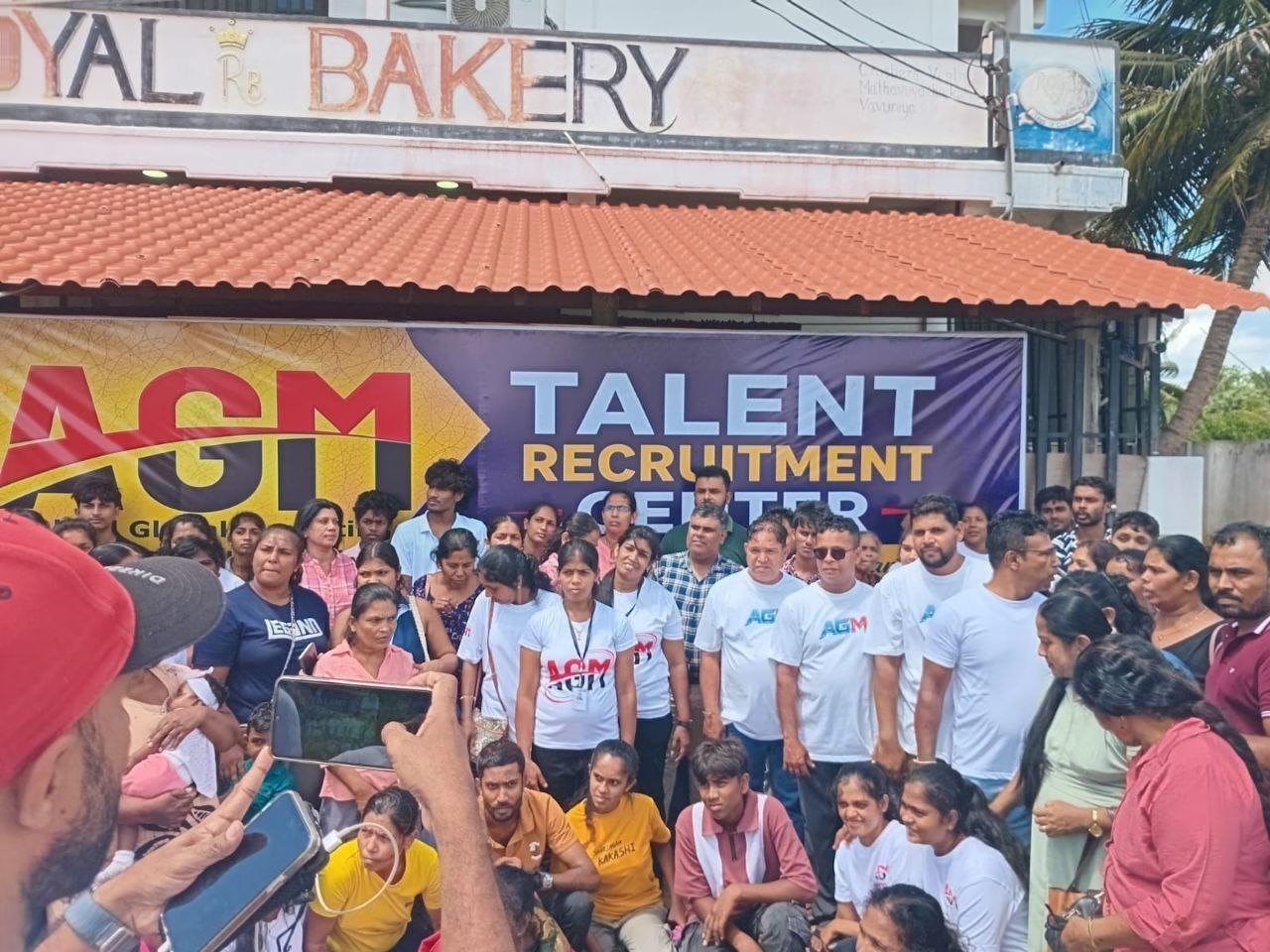
But how much can that social proof really mean when the scheme goes down? A crowd proves that a crowd gathered. Positive comments prove that people were persuaded. Early payments prove only that some money was released at that time. None of those things proves transparent external revenue, sufficient reserves or the ability to meet every future withdrawal.
What remains after the confidence disappears
When new deposits slow, the photographs and testimonials cannot create liquidity. Participants may be left with an impressive number inside an app but no reliable way to withdraw it. The same community that made the platform feel safe can become a network of people repeating the same unanswered question.
And so because Smatowl repeats the deposit, task, upgrade and referral structure documented in TM, Max App and AGM—and now seen again in GMS—it should be understood as part of the same operating pattern. That does not prove the same people control every platform. It does show that essentially the same scam playbook can be rebuilt with a new name, interface and story.
HackAware’s assessment
Smatowl displays the same core task-deposit warning pattern already seen in TM, Max App and AGM: capital unlocks earning access, repetitive tasks simulate commercial activity, recruitment expands the participant base, and messaging channels maintain trust. The evidence does not establish common ownership, but it does support a strong do-not-deposit warning.
Professional design is not financial transparency. A payment received today is not proof that a system can meet tomorrow’s obligations.
Stay sharp. Stay safe. Stay HackAware.


