
From Siri to Scary: The AI Race Putting You at Risk
Remember when the height of “artificial intelligence” was asking Google Assistant what the weather was?
Or telling Siri to call your mom and hoping she didn’t dial your ex instead?
And oh yes — Cortana. Remember her? Microsoft’s short-lived attempt at a virtual assistant before quietly disappearing into the history books.
Life was simpler then.
AI was a neat trick, not a life-altering force.
It hasn’t even been that long since ChatGPT-3 dropped — the moment AI truly went viral. Suddenly, students were using it to write essays, marketers were spitting out ad copy in seconds, and curious night owls were having deep conversations with a machine at 3 a.m.
Now, just a few iterations later, we have ChatGPT-5.
And if you’ve used it, you know how good it’s gotten — it can plan your weekend, help with your taxes, teach you a skill, even mimic your writing style so perfectly that your friends might not tell the difference.
That’s amazing… and terrifying.
The AI Arms Race We Didn’t Sign Up For
The big corporations aren’t stopping with chatbots on websites. Oh no — AI is now everywhere.
On WhatsApp. In your email. Built into your phone’s keyboard. Integrated into search engines, social media feeds, and even banking apps.
And honestly? I don’t think anyone asked for this much AI, this fast.
It feels less like innovation and more like a force-feeding.
The reason? Simple: they’re in a corporate AI arms race.
Whoever rolls out new features the fastest gets the biggest market share, the most hype, and the fattest profits.
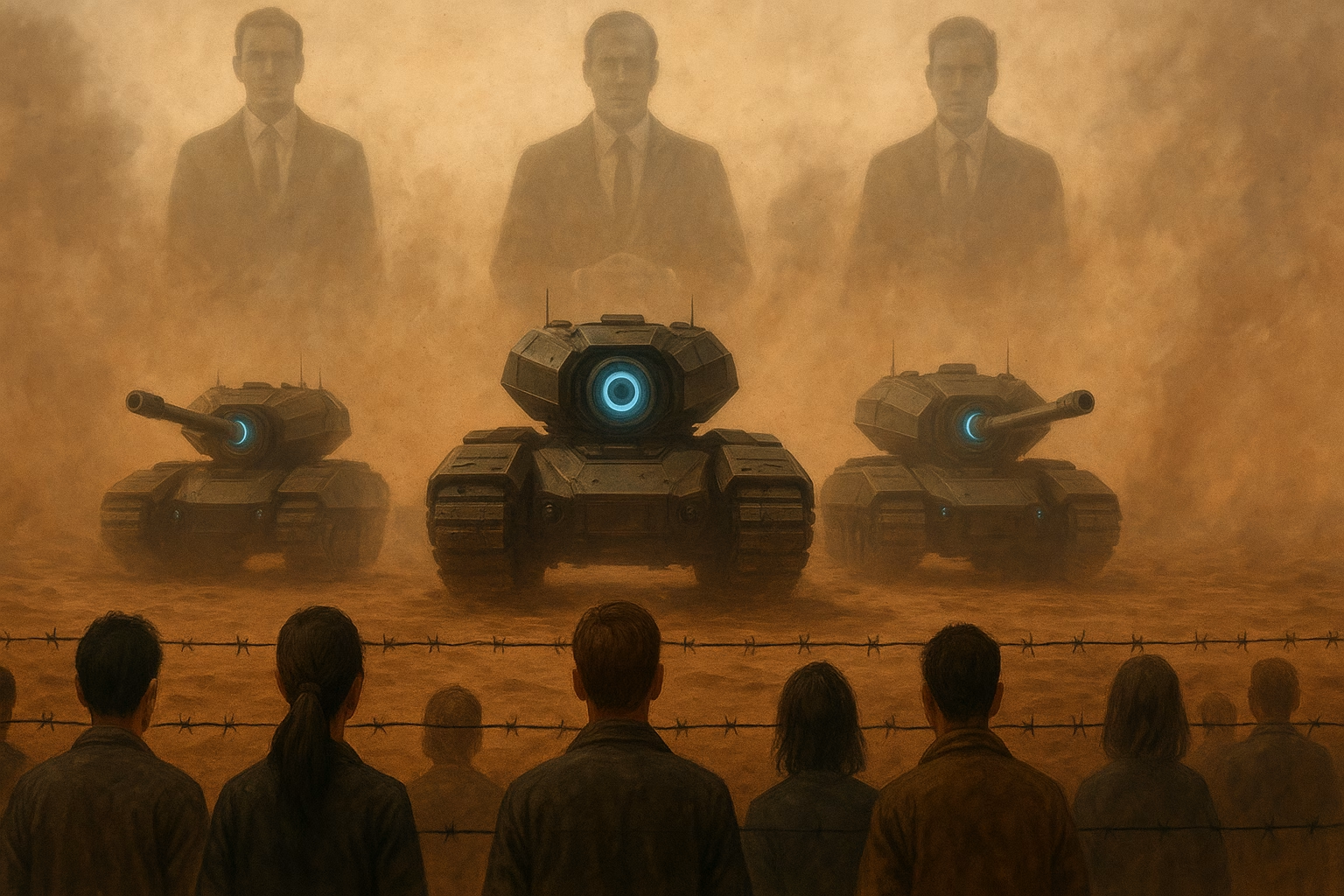
But here’s the part they don’t like to talk about — AI governance, safety, and long-term consequences are lagging far behind.
With deepfake technology now in anyone’s hands, the risks aren’t just for celebrities or politicians. The everyday consumer is in the firing line.
When Cool Turns Cold – The Dark Side of AI
It’s easy to think of AI as harmless fun — until you’re the one caught in the crosshairs.
Let’s put you in the story for a moment.
Scenario 1 – The Voice That Wasn’t Yours
You’re at work when your mother calls. Her voice is shaking.
“Why did you just call me asking for money? You said you were in an accident.”
Your heart stops — you never called her.
A scammer used AI voice cloning from a few seconds of audio they found online.
This is one of the fastest-growing deepfake scams in the world.
Scenario 2 – The Video That Never Happened
Your phone buzzes. It’s a message from a friend.
“I think you should see this…”
You click the link, and there it is — a very convincing video of you in a compromising, sexual situation.
It’s fake. A non-consensual deepfake.
But try explaining that to your employer, your family, or the internet once it starts spreading.
Scenario 3 – The Job Interview That Wasn’t Real
You’ve been applying for jobs for months when you finally get a video interview.
The interviewer looks professional, the questions sound legitimate.
You share your personal details, bank account info for “payroll setup,” even scan your ID.
Later you find out — the interviewer was an AI-generated video, the company never existed, and your identity is now for sale.
Scenario 4 – The Neighbourhood Rumour
A WhatsApp group in your community starts sharing a blurry “security camera” clip of you arguing with someone and damaging their property.
You’ve never even been there.
But the AI video fraud looks just real enough for people to believe it, and the gossip spreads faster than the truth.
Scenario 5 – The Fake Workplace Disaster
You get a frantic call from your company’s “head of security” saying there’s been a chemical leak and you must evacuate.
They send a video of the supposed incident — smoke, alarms, chaos.
Turns out, it’s a deepfake misinformation attack sent by a competitor trying to disrupt operations.
Scenario 6 – The Political Bombshell
One week before the election, a viral clip shows a candidate using racial slurs and admitting to crimes.
It’s fake — but millions see it before the truth comes out.
By then, votes have been swayed and democracy has been bent.
These aren’t science fiction. Every one of these AI misuse scenarios has already happened somewhere in the world in the past two years — just not always with your name on it… yet.
With Great Power Comes Great Responsibility
This is where the famous line fits perfectly — with great power comes great responsibility.
AI is the definition of “great power.”
Elon Musk once said that AI could be “the unravelling of humanity” if we’re not careful.
And whether you agree with him or not, it’s hard to ignore the risks when the tools are getting this powerful, this fast, with so few guardrails.
The Problem Is Not Just the Criminals
Yes, bad actors will abuse AI — scammers, hackers, stalkers.
But the deeper issue is corporations shipping powerful AI features before they’ve put in the protections.
- Voice cloning without meaningful consent checks.
- Deepfake video tools available to anyone, no identity verification.
- AI models that can impersonate you perfectly, yet no standard way to prove it’s fake.
We’re seeing the weapons before the rules.
How to Protect Yourself from Deepfake Dangers
You can’t stop AI from evolving, but you can protect yourself from AI risks to public safety.
- Limit what you post publicly: The less high-quality video/audio of you online, the harder it is to clone you.
- Verify before believing: If a loved one asks for money or sends alarming news, confirm through another channel.
- Stay informed: Learn to spot deepfake “tells” and follow trusted fact-checkers.
- Document the real you: Keep time-stamped proof of your real images and voice for disputes.
The Bottom Line
We went from Siri to ChatGPT-5 in what feels like the blink of an eye.
AI is now more capable — and more dangerous — than most people realise.
Corporations are pushing it into our lives faster than we can adapt, and governance is still limping behind.
This isn’t about fearing technology — it’s about demanding responsible AI governance from those who build it.
Because if AI can copy your face, your voice, and your words perfectly, then the most dangerous thing in the room… might not even be human.
Stay Sharp. Stay Safe. Stay HackAware.
– DEBUGGER


