



Kiran Gems Scam in Sri Lanka – Exposing the New Gem-Task Fraud
It usually starts during a quiet moment — late evening, after work, when your mind is tired and you’re wishing life came with just a bit more cushion. You’re scrolling through Telegram or WhatsApp, not expecting anything significant, when a simple message pops up. It’s polite, friendly, and strangely ordinary: “Hi, would you like to earn from gem evaluation tasks? Only 20 minutes per day.” Nothing about it feels threatening. In fact, it feels like the kind of opportunity you’ve probably seen circulating online for years.
The person sounds calm. They aren’t pushing you. They aren’t asking for money. They simply talk about reviewing gems, checking ring details, doing a few small tasks, and earning a little extra. And then they mention the name: Kiran Gems — one of the largest diamond manufacturers in the world. You look it up. You see the real company in India. You see their 1985 founding history, their awards, their global presence. And because the real company is legitimate, your brain automatically assumes the opportunity must be too.
You don’t know this yet, but you’ve just stepped into a carefully designed psychological funnel. A funnel that hundreds of Sri Lankans are being pushed through right now — each believing they found harmless side income, each unaware that the links they are about to click were built by fraud rings who specialize in manipulating trust.
Welcome to the Kiran Gems Scam in Sri Lanka — a digital theater designed to feel corporate, safe, generous, and real… right until the moment it devastates you.
1. The First Contact: A Soft Invitation That Feels Safe
The scam always begins quietly. A stranger messages you with a small, simple offer: “gem reviewing,” “ring evaluation,” “diamond checking,” or “task completion.” It doesn’t look like a scam. There are no threats, no aggressive pitches, no obvious signs of fraud. It looks like casual part-time work.
When you show even slight interest, you’re passed to a “manager” or “coordinator.” This hand-off is intentional. It makes the whole thing feel organized — as if there are departments, instructions, and real procedures. Victims don’t feel suspicious because the approach feels mundane, almost administrative. And the scammers take great care to avoid triggering any alarm at this early stage. They get you comfortable before they get you committed.
2. The Website: A Fake Kiran-Styled Platform Designed to Disarm You
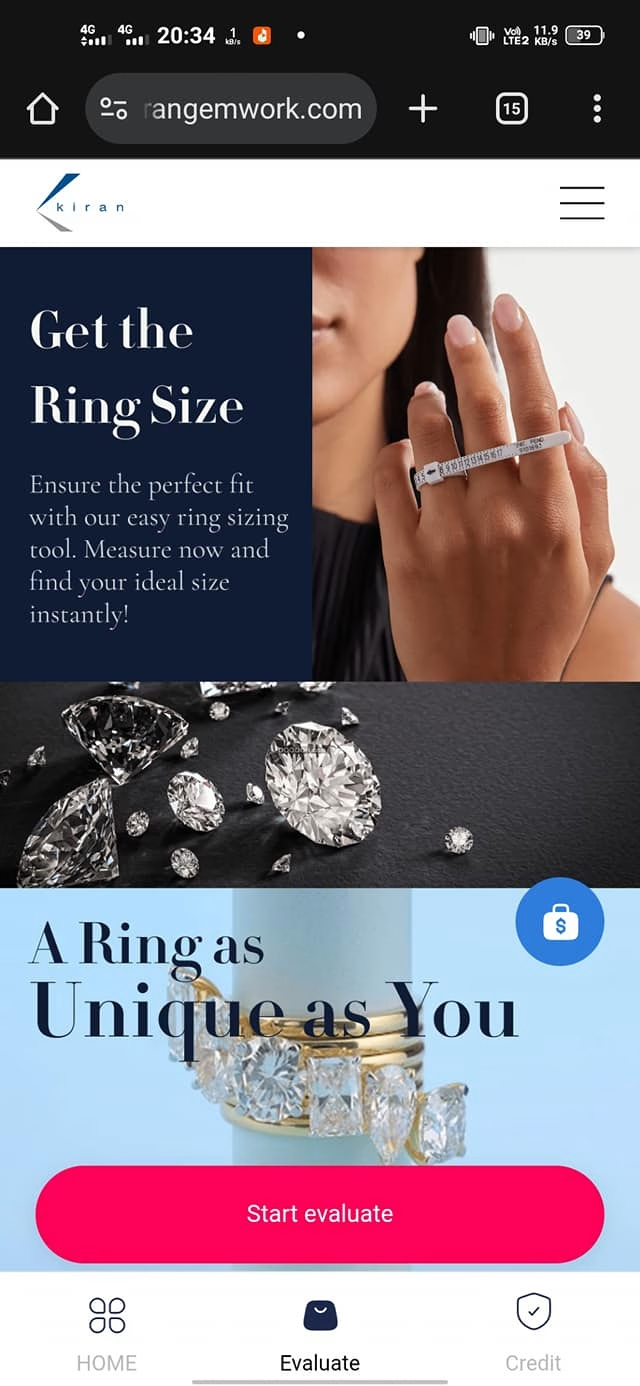
When the agent sends the website link, that’s the moment your guard drops without you realizing it. The site looks polished. Clean design. Blue-and-white color scheme. Diamond images. High-resolution photos of rings. Buttons labeled “Start Evaluate,” “Gem Assessment,” “Ring Review,” “Task Center.”
And the branding — Kiran — is placed everywhere.
Victims check Google again. They find the real Kiran Gems company. They compare the logo. They see how professional the real company is and assume the website must be connected. This blending effect is powerful. Your brain doesn’t separate the real company from the fake website. It merges them.
What seals the illusion is how the “account activation” is presented. A handler tells you your account is being manually activated. You imagine an administrator approving your file. You imagine a team behind the scenes. That small act tricks you into believing this is a controlled system with real human oversight — not a scam server run from a laptop.
3. The Welcome Bonus: The Bait Hidden Inside Generosity
Once inside, you’re greeted with a surprise: a trial balance worth tens of thousands of rupees. Sometimes Rs. 40,000. Sometimes more. You’re told the bonus can be used only for tasks, not for withdrawals. But that doesn’t bother you because you feel like the company is giving you something valuable.
The early tasks are simple. You click. You evaluate. You submit. Your commissions increase little by little. And because everything “works,” your brain starts trusting the system. The experience feels structured — almost like freelance gig work. You are being trained to believe the platform is real, stable, and profitable.
The welcome bonus is not a reward. It is conditioning.
4. The First Withdrawal: The Moment They Earn Your Trust Completely
After completing your trial tasks, the system lets you withdraw a small amount — maybe Rs. 1,000, maybe Rs. 5,000 or Rs. 10,000. And when the money actually arrives in your bank account, a switch flips inside you.
A scam wouldn’t pay you.
A scam wouldn’t let you withdraw.
A scam wouldn’t process your payment in minutes.
Except this one does — because the payout is bait. The scammers lose a little now so they can steal a lot later. This single moment is what traps most victims. When real money arrives, your skepticism dies instantly. You stop questioning the system and start leaning into it with confidence.
5. The Telegram Group: A Stage Where Every Actor Plays a Role
After the first withdrawal, you’re added to a Telegram group that looks full of activity. Members greet each other. Someone says “Finished 20 tasks today!” Another shares a screenshot of a successful withdrawal. Someone asks a question, and multiple people reply instantly with reassurance.
It feels like a community. It feels like a team. It feels like you’re not doing this alone.
But nearly everyone in that group is a scammer playing a character. Their messages, screenshots, and encouragement are rehearsed. The group is not a workspace — it’s a performance designed to influence your emotions. You are surrounded, not supported.
6. The Private Messages: Manipulation Disguised as Friendship
Someone from the group will eventually message you privately. They always sound like they’re in the same situation as you. They say they were unsure at first but now feel safe. They mention a relative in a government job who checked the platform and said it’s legitimate. They say they withdrew money successfully.
These messages feel honest. They feel personal. And because they come from an “ordinary member,” they feel trustworthy. This is where emotional grooming happens. The scammers use empathy to disarm you and familiarity to control you. You’re no longer thinking logically — you’re thinking socially.
That’s exactly what they want.
7. The First Real Deposit: When You Believe You Are Winning
Once trust is fully established, the platform asks you to deposit real money to unlock bigger tasks. The amounts are usually moderate: Rs. 30,000 to Rs. 50,000.
By now, you feel safe.
You’ve already been paid.
You’ve seen genuine-looking group activity.
You’ve spoken to “peers.”
You feel included.
So you deposit.
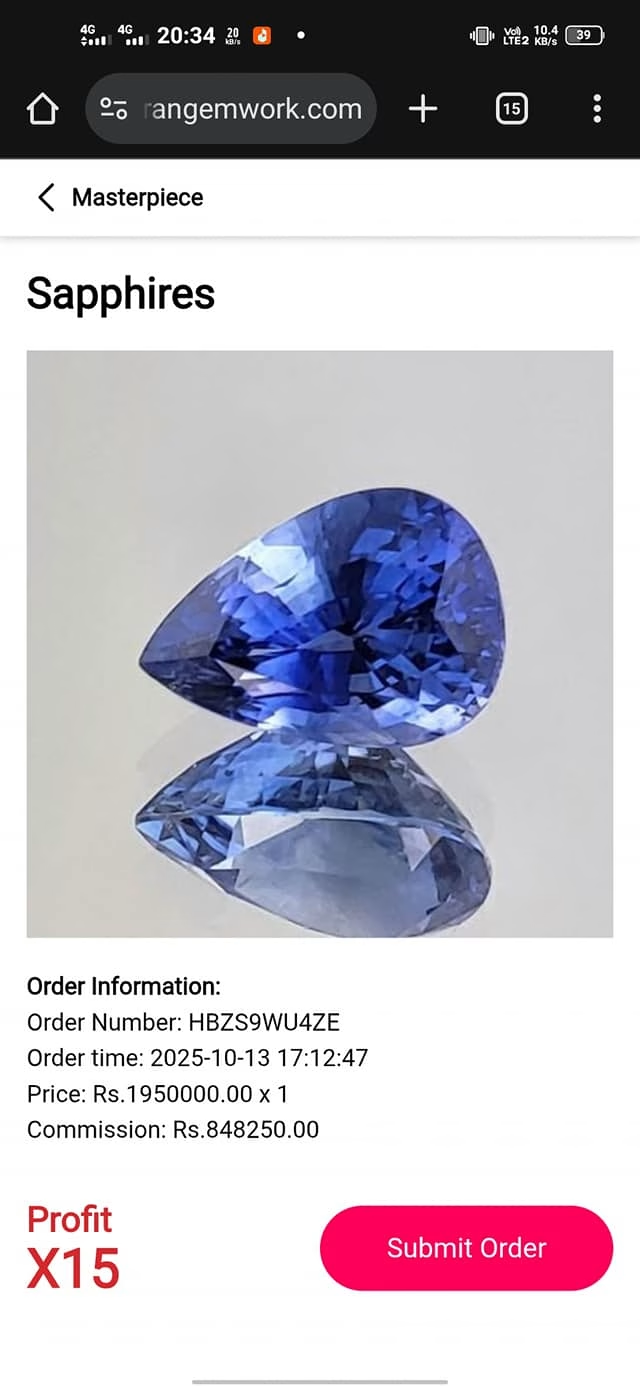
Immediately, your dashboard balance begins to climb. Your Rs. 40,000 becomes Rs. 90,000. Your Rs. 50,000 turns into Rs. 120,000. It feels like you’ve discovered something powerful — a system that’s actually helping you grow your money.
But the numbers are just pixels on a screen. They’re programmed to rise so your willingness to deposit rises with them.
8. Posters, Announcements & Visual Manipulation
Then come the posters — glossy, corporate-styled images claiming:
• Daily bonuses
• Agent salaries
• Renewal offers
• Sunday rewards
• Deposit charts showing huge returns
They look like official memos. They feel like updates from a real company. These posters make victims feel like the system is active and structured. They push urgency, belonging, and opportunity. They turn you from a cautious participant into an enthusiastic investor.
But every poster is fake — created only to shape your behavior.
9. The Premium Task: The Negative Balance Trap Begins
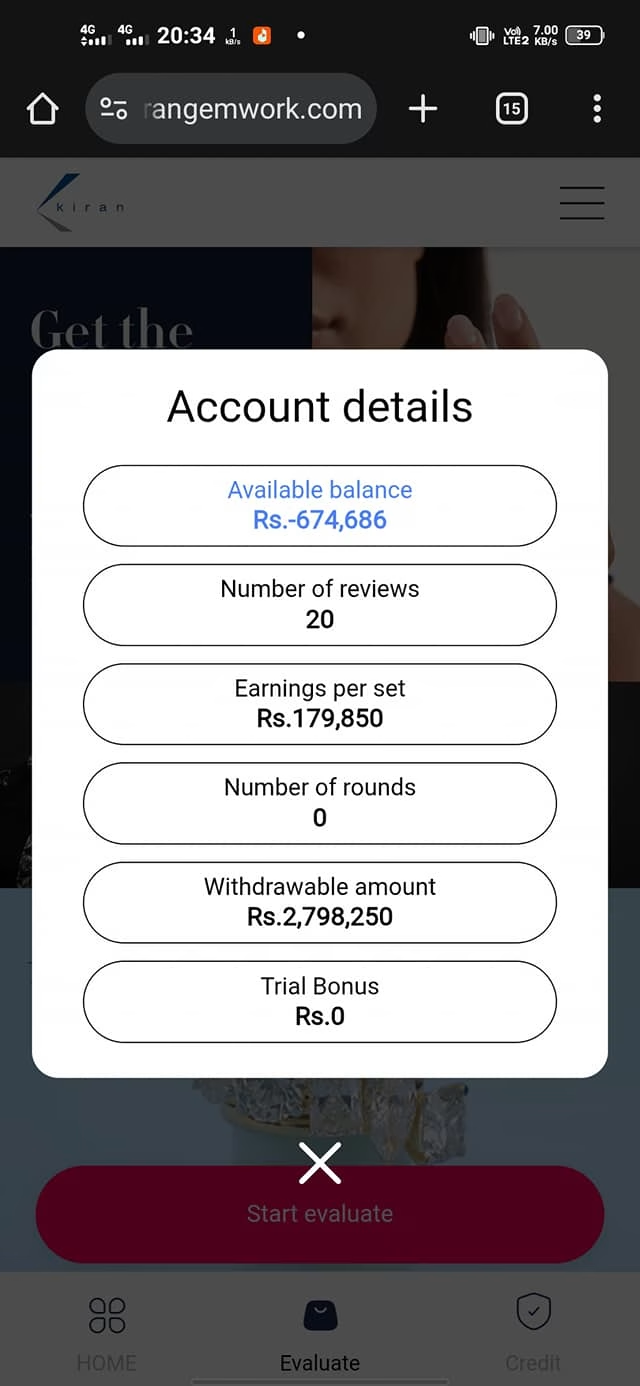
Eventually, the system assigns you a “Premium Gem Task.” These tasks automatically pull you into a massive negative balance. You suddenly see something terrifying like –Rs. 674,686, exactly like the screenshots you shared.
Your stomach drops.
You panic.
You think you’ve made a mistake.
But your handler reassures you:
“Don’t worry, this is normal. Just top up and complete the task. You’re about to unlock a huge reward.”
You look at your dashboard showing millions in “working balance.” It feels wasteful not to top up. And so you pay.
This is the turning point — where victims begin losing everything.
10. The Endless Cycle of Premium Traps
Once you clear the negative balance, the system lets you do a few normal tasks… then assigns another premium task. And then another. Each one plunges you into more debt on the platform, forcing more deposits.
Victims convince themselves they are “just one step away.” They sacrifice savings, pawn jewelry, sell belongings, borrow from friends. The scam doesn’t just drain money — it drains hope, dignity, and emotional strength.
The cycle continues until you are financially and mentally exhausted.
11. The Final Extraction: Taxes, Verification & Silence
When you hesitate or run out of funds, the scammers attempt one last squeeze. They claim you must pay taxes, verification fees, or security deposits before you can withdraw. The amounts are enormous — sometimes in the millions.
But your dashboard shows a fortune waiting, so victims pay. And the moment the scammers sense they cannot extract any more, they disappear.
The Telegram group dies.
Your manager blocks you.
The website goes offline.
And everything collapses.
12. When You Finally See the Truth
The realization hits hard. Nothing was real.
Not the tasks.
Not the bonuses.
Not the posters.
Not the group members.
Not the earnings.
The hardest part isn’t even the financial loss — it’s the emotional betrayal. You trusted people who never existed. You believed in a system that was designed to break you.
But you are not alone. Thousands of Sri Lankans have been pulled into the Kiran Gems Scam in Sri Lanka, and every story shares the same anatomy: hope, manipulation, loss, silence.
The dashboard numbers were never real.
The “withdrawable balance” was fiction.
The entire platform existed for one purpose — extraction.
But today, you have the clarity that scammers never wanted you to have.
Know the Threat. Stop the Attack
— DEBUGGER
⚠️ LEGAL DISCLAIMER
This article discusses scammers impersonating Kiran Gems for fraudulent purposes. The legitimate company has no involvement in this scam. HackAware does not accuse, blame, or associate the real organization with any criminal activity. Our goal is strictly educational — to protect the public and raise cyber-fraud awareness.